 Boards & Governance
 M&A & Transactions

.png)
.png)
 Board Management Software
 Customer stories
 Insights
 Events & Webinars
 Security & Privacy
 Product updates

.jpg)




-Jul-03-2026-06-32-50-9626-AM.png)
 Login
Login

You recognise the link between efficient data access and profitability, so choice of board platform is a personal priority. And where an existing platform or process is failing, you know that a more effective alternative should be sourced as quickly as possible.
But how do you get the rest of the board on board with your desire for change?
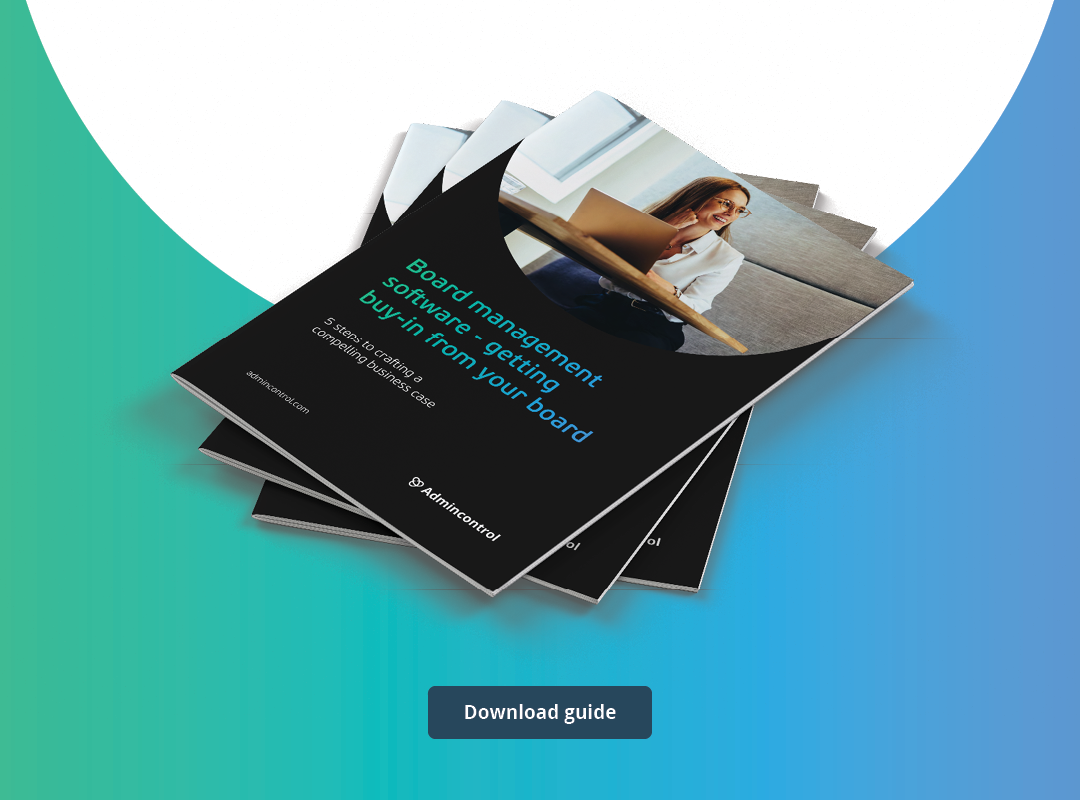
Your 10-step plan for getting buy-in
Building a convincing case for change isn’t easy, even when the board supports transformation in principle. In practice, it takes preparation. A strong case usually comes together through the following ten steps.
1. Needs Assessment and Gap Analysis
You’re likely exploring a new board platform because something isn’t working today. Maybe processes are still manual. Maybe spreadsheets are filling in for systems that should be doing more. Whatever the case, the first step is to be clear about what you actually need, and where the current setup falls short.
Importantly, this isn’t just about your needs. Every board member will have their own priorities and frustrations. Gathering those views early does two things:
- It helps you choose a platform that works for everyone
- It makes it much easier to get support later on
Once you can show the gap between where you are and where you need to be, you have a strong business case.
2. Strategic Alignment
Change for the sake of change rarely gets approved. Boards want to see how a new platform supports the bigger picture.
Most organisations share similar high-level goals: improving efficiency, reducing risk, strengthening security, enabling better decision-making. Your role is to show how a new board platform actively helps achieve those goals.
If you can show how it helps specific priorities for each stakeholder, your case will be stronger. This includes areas like compliance, risk oversight, or saving time.
3. Value Proposition
At some point, every stakeholder will ask: what do we gain from this?
Often, the unspoken question is: what do I gain?
A strong value proposition puts numbers behind the benefits wherever possible. This might include:
- Time saved preparing, reviewing, or distributing board materials
- Reduced administrative effort
- Lower risk through better compliance and control
For more evidence-driven stakeholders, working with vendors to quantify these benefits can make a real difference.
4. Stakeholder Engagement
By now, you’ve already started engaging stakeholders through the needs assessment. Keep that momentum going.
Regular check-ins help ensure the project doesn’t lose relevance as priorities shift. They also create a sense of shared ownership. When board members feel involved in creating the solution, they are more likely to support it. They will also use it properly once it is in place.
5. Risk Assessment and Mitigation
No platform change is completely risk-free, no matter how good the sales pitch sounds. A credible proposal acknowledges that.
Identify the potential risks early, assess their impact, and explain how you will mitigate them. This shows the board that someone has carefully thought through the change, and it makes the transition smoother if the project receives approval.
It also feeds directly into the next step: understanding the true return on investment.

6. ROI Analysis
To strengthen your proposal, assign a financial value to the benefits wherever you can. Even if the initial cost seems high, boards are often willing to invest when the long-term value is clear.
Be honest here. If the projected return is minimal, it’s worth pausing and reassessing. ROI is often the key factor. If you can't make a strong financial case, the board may doubt whether you really need to make a change.
7. Demonstration
Seeing a platform in action is far more persuasive than reading about features.
Work with vendors to tailor demonstrations so stakeholders can clearly see:
- How the platform supports strategic goals
- How it addresses their specific needs
- How it fixes gaps in current processes
- How sensitive data is protected
Different stakeholders care about different things, so demonstrations should be adapted accordingly.
8. Vendor Selection and Expertise
Switching board platforms isn’t just a software decision, it’s a partnership.
Alongside functionality, consider the vendor’s experience, track record, and understanding of board operations. You want a provider that supports many boards and shows long-term customer satisfaction.
This kind of credibility gives stakeholders confidence. You're not just buying a tool; you're choosing a trusted partner.
9. Pilot Phase
Before committing fully, a pilot or proof-of-concept can be invaluable. It allows you to confirm that the platform:
- Delivers what was promised
- Works in real-world conditions
- Doesn’t introduce unexpected risks
- Can realistically achieve the projected benefits
Running the pilot alongside existing processes also helps IT and administrators plan a smoother, phased rollout.
10. Communication Plan
Platform changes don’t happen overnight. A clear communication plan ensures everyone knows what’s happening, when, and why.
Regular updates help build trust, manage expectations, and gain support. This is important not just for board members, but for everyone impacted by the change.
In Conclusion
Moving to a new board platform (or adopting one for the first time) can deliver meaningful, measurable improvements. Even small gains in efficiency at board level tend to cascade through the organisation.
With the right platform, boards can better handle change, improve governance, and set an example for the whole business.
And for you as board secretary, it means spending less time fighting systems and more time supporting better decisions.