
 Boards & Governance
 M&A & Transactions

.png)


.png)
 Board Management Software
 Customer stories
 Insights
 Events & Webinars
 Security & Privacy
 Product updates

.jpg)




-Jul-03-2026-06-32-50-9626-AM.png)
 Login
Login

In high-stakes mergers and acquisitions (M&A), the impact of a combined or new culture can make or break a deal. Most commonly, we hear about examples of when it goes wrong - when there’s a culture clash or mismatch, but it’s important to recognise that combining cultures can also bring new opportunities, talent and growth.
Why culture matters in M&As
Firstly, let’s look at what culture means. It can be defined as the collective values, beliefs and behaviours of a company. It determines the way people interact with, or feel about, a business. Culture will impact a company’s employees but it also creates a relationship with customers and shareholders too.
A business’ culture shapes the ways things get done - from how decisions are made to the working style of employees. Some cultures may be more collaborative whilst others will be characterised by a more formal and structured environment.
In M&As, culture is one of the biggest reasons for deal failure. Although studies vary, they show that between 50 and 75% of acquisitions fail to deliver their promised value due to cultural differences1. Since culture has a significant impact on how work is done and decisions are made, it is an important driver of overall company performance and is therefore a critical element of an M&A strategy. However, as it’s not as quantifiable as financial achievements, its contribution to deal success, particularly in the longer term, can easily be overlooked.
When cultural clash proves costly
One of the most talked about failures in the history of modern M&As, AOL and Time Warner merged in 2000 for $350 billion. However, opposing cultures and failure to manage cultural divergence eventually led to a $99 billion loss just two years later. While the recession of 2008 was a contributing factor, it was a high price to pay for poor cultural integration.
Source: Rebellionresearch.com
Dealmakers will pore over balance sheets, legal contracts and business plans for days and weeks during the due diligence period, but an in-depth analysis of culture should happen concurrently. Evaluating culture and how it impacts current and future performance can seem complex. For those conducting modern M&As however, there are many tools and strategies that can be deployed.
Here are the steps:
Step 1: Evaluate the current culture
A culture audit is the first step in the process of understanding how an organisation’s culture works in practice. It’s a deep dive into perceptions and observations. While that can sound tricky to assess, there are some practical tools and exercises that are helpful.
Interviews
Select individuals across a range of departments and job roles and conduct 121 interviews. It’s important to include a cross-section of staff from the most junior up to and including the senior management team.
It can also be useful to ask stakeholders outside of the organisation. As Deloitte points out, those inside a culture may find it difficult to recognise its characteristics whereas external observers can be more insightful as they are not as susceptible to the status quo.2
To help interviewees be objective, ask open-ended questions that allow them to talk generally about the culture. For example:
- Can they share examples of what they like about the culture
- Do they have ideas on how it could be improved
- Is there anything they’d like to see done differently in the next 12-24 months
- How would they describe the culture to an outsider, e.g. consultative, bureaucratic, formal, creative etc
As Deloitte points out, those inside a culture may find it difficult to recognise its characteristics whereas external observers can be more insightful as they are not as susceptible to the status quo.
Surveys
Conduct employee surveys allowing anonymous responses to increase openness. Questions could focus on:
- What they like about the culture
- What they feel could be improved
- Whether they feel their opinions and ideas are respected by colleagues at all levels
- What the relationship between senior management and employees is like
- Whether they would recommend the company to their friends as a good place to work
Workshops
Workshops can offer a more in-depth understanding of how teams or groups of people interact with one another. Invite departmental teams or small groups to discuss a project or issue for the company. Note down aspects such as:
- Do people treat each other with respect
- Are people listening to each other appropriately
- Are interactions friendly and supportive
- Does it seem as though everyone feels able to talk and get involved
Once the group discussions are finished and people are warmed up, it’s a good time to ask the group to describe the company’s culture in 2-3 sentences - writing this down individually ensures you get answers from everyone and prevents one or two viewpoints prevailing.
Observation
Observing how people do their job is another method of gathering cultural insight. Sitting in on meetings and listening to discussions, formal or informal are useful. In particular, observe how decisions are made and who is accountable for what. This can generate process flow maps that illustrate how things work now and identify any problems or opportunities for the outcome of the M&A.

Step 2: Start the planning process
Once information from surveys and interviews or workshops has been gathered and evaluated, it’s time to start the planning process. Whether two cultures are merging or one is in effect being replaced by another, a detailed plan will help realise deal value, improve employee satisfaction and drive overall company performance - all essential aspects of an M&A strategy.
The timing for creating this plan is important. Cultural merge planning should not begin on day one after the deal closes and neither should it be considered just for the first 100 days. For the best chance of success, the planning process should start during due diligence. Although this may seem risky as the deal might not close, early planning can help avoid eroding the value a successful deal promises.
As McKinsey reports, with the benefit of hindsight many senior executives realise they should have considered culture more.
“Many CEOs underestimate the complexity of shifting the combined organization to new ways of working. In our survey at the Merger Integration Conference, 60 percent of acquirers expressed regret that they did not dedicate more resources to culture and change management during the integration process.” 3
Cultural merge planning should not begin on day one after the deal closes and neither should it be considered just for the first 100 days. For the best chance of success, the planning process should start during due diligence.
Step 3: Identify problems and opportunities
Once culture audits have been completed on both sides of a potential M&A deal, the next step is to identify both problems and opportunities. In the case of a merger, two different cultures may plug gaps that exist and offer new opportunities. An acquiring company may uncover a completely different way of doing business and decisions will need to be made on what the new culture will look like.
Divergence can be positive or negative, but bear in mind successful cultural integration isn’t always about changing everything. Sometimes retaining what already exists and finding ways for different cultures to work alongside each other is best. Keep asking the same question - will a proposed change add commercial value or help cultural cohesion?
Keep in mind change should always create additional commercial or cultural value
Step 4: Define company values
Start by looking at values and mission statements. Look for common ground that can be retained or developed further and importantly identify potential mismatches that may cause issues.
- How do the companies describe their mission?
- Are there commonalities that can help form a foundation for the new culture?
- Where do values diverge and does this create an opportunity or challenge?
Answering these questions as a team can involve intense discussion, but will help a business capitalise on synergies while resolving cultural differences that could detract from the success of the deal. The outcome of this process also helps ensure cultural merge planning aligns with the wider strategic and operational objectives of the M&A strategy.
To get things started, here’s some more questions to discuss:
- Should we retain two separate cultures that co-exist but with minimal cross-reference to each other?
- Should we create a new culture that replaces what currently exists on both sides of the deal?
- Are there opportunities to knit together the best aspects of each?
- How can merging or acquiring another company solve gaps or issues in our own culture?
- How does the proposed culture enhance competitive advantage?
Step 5: Harness technology to support cultural integration planning
At this point we have looked at ways to gather information and how to start planning a post-M&A culture. Inevitably, lots of documents are generated as part of this process. All of this information needs to be analysed, shared and stored securely creating a considerable workload for the deal team.
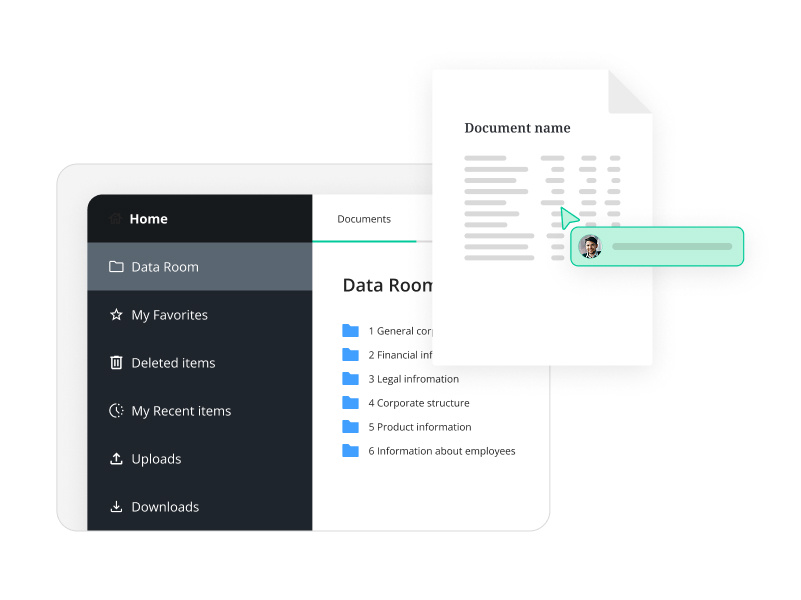
Modern M&A technology such as virtual data rooms (VDR) and artificial intelligence (AI) tools can help simplify and speed up this process. While VDRs are typically used for the due diligence phase of a deal, they are increasingly used for every part of the modern M&A deal lifecycle offering a secure environment that improves workflow, collaboration and project management.
A VDR is the safest place to evaluate the results of a culture audit and develop the integration plan too. Just like financial statements, these sensitive documents will be protected by the advanced security of a VDR compared to standard cloud-based storage solutions.
What’s the difference between a VDR and cloud storage?
A VDR utilises enhanced cloud technology. Whereas generic cloud storage solutions encrypt data only during file transfer or movement, a VDR encrypts it continuously - during storage and transfer. This means that even if a VDR is hacked, data within it is still encrypted and illegible to the hacker.
Review and refine regularly
A plan for cultural integration is never really set in stone. Reviewing implementation on a regular basis is essential and senior leaders need to understand its impact and how that evolves over time. Although it is important to track the reality of cultural integration during the first 100 days after a deal closes, it should be a continuous process as it will likely take a minimum of 12-24 months to see the true impact.
Reviews can be formal or informal but should include honest feedback from all those that inputted into the cultural integration plan in the first place. Employees, managers and even customers are best placed to identify roadblocks and opportunities as a new culture embeds.
In summary
Cultural integration planning is vital to modern M&A outcomes and most effective when tackled early in the deal lifecycle as a critical part of due diligence. Gathering insight and information about existing cultures in companies on both sides is about proactively realising the potential value of a deal over time.
Surveys, workshops and interviews with employees, senior leaders and external stakeholders will inform the process and M&A technology supports collaboration and more efficient cultural planning. Virtual data rooms are a secure repository for storage and sharing documents but also offer features such as new AI technology designed to speed up laborious tasks so a deal team can stay focused on the bigger picture.
Finally, building a sustainable culture that employees, customers and shareholders can develop an emotional connection that creates a circle of engagement. Staff retention is improved and the company will find it easier to attract new talent. Customers will feel more loyal towards a company with a culture they resonate with. A defined and strategic culture will also make the company more attractive to shareholders and investors too.
These outcomes will ultimately drive performance generating additional value for the bottom line. Although intensive, investing time and resources in getting cultural integration right pays dividends in preventing deal failure - it underpins an effective M&A strategy to help dealmakers get a merger or acquisition successfully over the line more often.
Sources