 Boards & Governance
 M&A & Transactions

.png)




.png)
 Board Management Software
 Customer stories
 Insights
 Events & Webinars
 Security & Privacy
 Product updates

.jpg)




-Jul-03-2026-06-32-50-9626-AM.png)
 Login
Login
 Although inflation is set to fall this year, the long term economic outlook remains uncertain. According to the World Economic Forum, businesses face a ‘triple challenge’ consisting of high costs, tightening monetary policy and low demand that is weakening their financial position. Continuing geopolitical instability means the picture is likely to stay the same for years to come.
Boards and executive leadership teams must adjust their strategies to deal with immediate risk. At the same time, they need to balance their approach with the need to drive future resilience and growth. This is what will define good corporate governance and leadership in the era of economic uncertainty.
How does economic uncertainty affect a business? Your guide to good corporate governance that delivers resilience and growth
In this post, we look at four areas organisations need to address now to create a stable platform for long term success. Specifically we cover:
-
the need for continued investment in digital
-
strategies for managing climate change
-
plans for countering increasing cybersecurity threats
-
the importance of a positive workplace culture
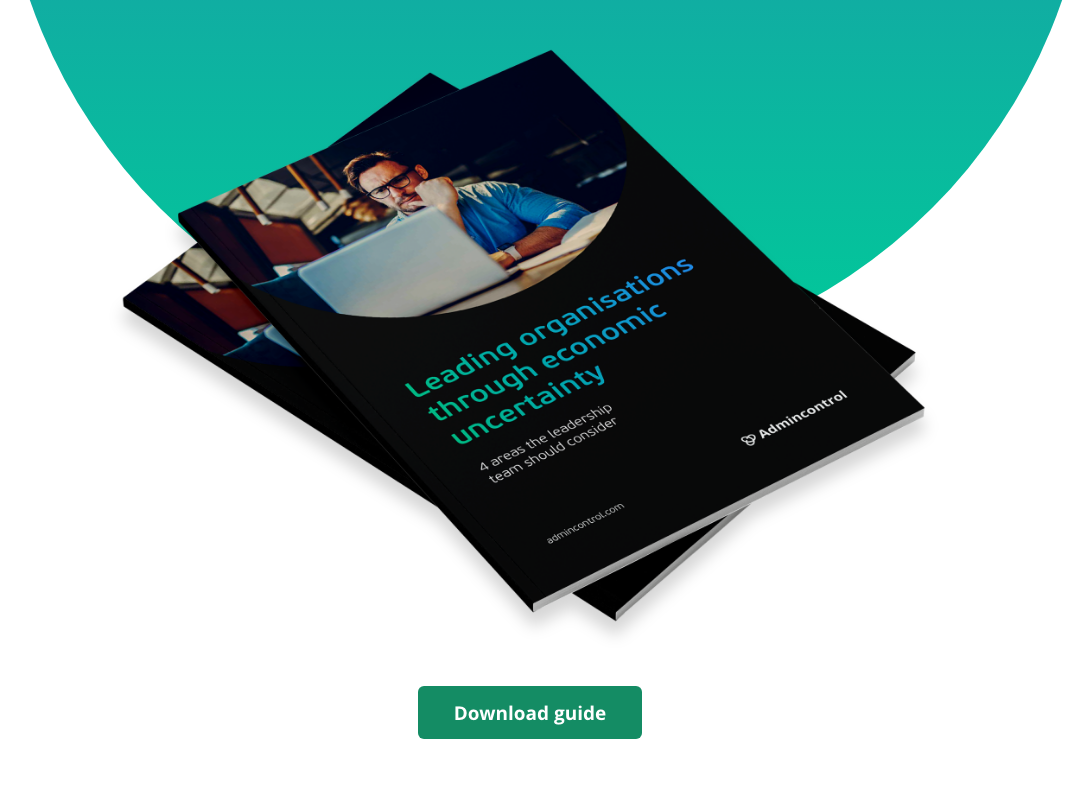
More detail on this topic is available in our eBook: Leading organisations through economic uncertainty: 4 areas the leadership team should consider
1. Balance the digital innovation budget
According to Gartner, “lessons learned from prior downturns show that industry leaders accelerate in downturns by boldly investing in initiatives that matter. Right now, those investment decisions are all about digital.”
There’s no doubting the truth of this statement. Organisations that continue to invest in digital automated processes and reduce operating costs. They deliver advanced digital services that will improve customer experience and spark demand.
The challenge is finding the budget for this investment while finances are constrained. Representation from CIOs will be critical. But CFO, boards and CEOs also need to play a key role to make sure investment in transformations stays on track.
-
CFOs must introduce strict cost management measures, fully aligned with trade-offs that reduce spending on resources in other areas.
-
Boards need to collaborate with the CFO to assess the risk of budget reallocation and ensure that all stakeholder needs are considered.
-
CEOs need to anticipate where the market is heading, set the vision, and make sure investment stays in line with strategies for driving future profit.
Right now, these three functions must work in harmony to ensure that digital delivers a defence against ongoing disruption and a platform for future prosperity.
2. Turn climate change risk into opportunity
Adding to the problem of leadership in an era of economic uncertainty, organisations face climate change challenges that are impacting supply chains, devaluating assets and driving up costs.
Their future stability rests on reallocating financial budgets away from short-term operational demands towards investment in green technologies, sustainable business partnerships and management structures that will support a more economically viable future.
The aim should be good corporate governance that turns risk into opportunity. A report by the Global Commission on Adaptation has estimated that every $1 invested in climate change adaptation could result in $2–10 in net economic benefits.
To make this happen, leadership teams need to make their ESG teams central to decision making. They must also move away from voluntary reporting on sustainability. Data shows that only 1% of companies who provide information under this model demonstrate they have a credible plan for a low-carbon transition.
Instead, organisations should be submitting to independent, globally recognised standards of reporting that will help them to address the right challenges, improve their performance on sustainability and provide a more effective hedge against future uncertainty.

3. Plan for the continued rise of cybersecurity threats
When leaders ask themselves – “How does economic uncertainty affect a business?” – they need to be aware that the impact includes increased activity from cyberattackers. Speaking at the recent World Economic Forum Annual Meeting in Davos, experts warned of the imminent threat of a cyber apocalypse caused by attacks that are increasing in sophistication and frequency.
Leaders also need to understand the cost of a breach. A recent survey found 70% of businesses lost 5% or more of their valuation following their largest cybersecurity incident in the last 18 months.
To meet this growing threat that builds further uncertainty, leadership teams should consult regularly with their cyber teams and monitor progress on defence strategies.
They should also invest in both retaining and recruiting cybersecurity talent. Gartner recently predicted that 25% of cybersecurity leaders will leave their roles by 2025 due to workplace stress.
It’s also important to revisit plans for recovery and continuity in the event of attack. This requires regular consultations with all relevant areas of the business – including operations, HR, customer service and corporate communications. While the economic outlook remains uncertain, leadership teams need to guard against the threat of attacks that could impact their plans for future growth.
4. Create a positive culture
An uncertain economic outlook can undermine the stability and motivation of the workforce. Currently, organisations are also operating amid critical skills shortages that make it difficult to retain and recruit the right people. According to Gartner, +47% of CFOs report that it’s difficult to find and hire enterprise talent in the current market.
To move forward and grow, boards and leadership teams need to manage these issues by developing robust business plans that individuals, the workforce and potential recruits buy into.
This means listening to existing employees, addressing their concerns honestly, and being clear about plans for review, salary expectations and rewards. News of a positive and open culture spreads around the skills market quickly.
Equally, executive leadership teams need to work in tandem with their boards to create a visionary roadmap that looks at least five years into the future. Such plans need to be demonstrably resilient to future disruption and turbulence. This will be critical to future recruitment plans.
Above all, leadership teams need to be transparent and communicate their plans clearly to all levels.
Read more about the proactive steps leaders can take to future proof their business operations in: Leading organisations through economic uncertainty: 4 areas the leadership team should consider