 Board Portal
 Board Performance
 M&A & Transactions



 Board Management Software
 Customer stories
 Insights
 Events & Webinars
 Security & Privacy
 Product updates





 Login

Nikolai Lunde’s career in M&A began long before he joined Oaklins in 2008. After completing his bachelor’s degree in the US and spending several years in San Francisco, he returned to Norway and joined BDO’s consulting business as employee number 2.
Over the next decade, he helped build the firm’s transaction support division, working across valuations, due diligence and strategic advice. It gave him a front-row view of what makes transactions work and what can make them go wrong.
He joined Oaklins as a partner and became Managing Partner of Oaklins Norway in 2014. After years spent close to the deal, he has gained something that cannot be taught in a textbook: perspective.
Deal Maker or Deal Facilitator?
Perhaps the most revealing part of Nikolai's philosophy is the distinction he makes between being a deal maker and a deal facilitator.
Earlier in his career, he assumed that the most successful M&A professionals were the people who were hardest in negotiations, the people who could push through a deal, apply pressure and get the other side to concede. Experience changed his mind.
"I don't want to be a deal maker. I want to be a deal facilitator." A deal maker can focus heavily on getting to "yes." A deal facilitator focuses on creating the environment in which both parties actually want to get to "yes."
“Being a facilitator does not mean being passive or avoiding tough negotiations. Quite the opposite. My job is to achieve the best possible outcome for my client, and that often requires being proactive, decisive, and relentless. But experience has taught me that understanding the other side’s motivations and challenges is often more effective than simply pushing harder. You need to know when to apply pressure, when to find a creative solution and when to take a step back.”
Buyers need reliable information, sellers need confidence that their priorities are understood, and management and other advisors need clear communication. When negotiations become difficult, an experienced advisor must address the issues decisively while keeping the dialogue constructive.
"You don't make a deal on negotiations alone," Nikolai says. "You make it on trust from both parties involved."
The objective is not to win every argument, but to secure the best achievable outcome for the client. That requires getting the right parties to the table, applying pressure when appropriate, and resolving difficult issues without losing sight of the bigger picture.
The Biggest Misconception: "We Already Have Buyers"
That bigger picture is particularly important when working with business owners who believe they are already most of the way to a transaction. One of the most common misconceptions Nikolai encounters is remarkably straightforward.
A business owner approaches an advisor and says:
"We already have two buyers knocking on the door. We just need help negotiating the price."
On the surface, it sounds logical. If buyers are already interested, why would you need a complicated M&A process? But this is precisely where many owners underestimate what is involved. Having interested buyers is not the same thing as being ready to sell. A transaction requires financial information to be organised. Contracts need to be reviewed. Corporate documentation needs to be gathered. Commercial information needs to be prepared. Employees, customers, suppliers, intellectual property, technology, tax matters and potential liabilities may all become relevant. And that is before negotiations even begin.
The seller also needs to understand what the buyer is likely to scrutinise, because knowing the company inside out does not necessarily mean seeing the business from an external buyer’s perspective. That difference in perspective can bring previously overlooked risks to the surface, including issues the owner may never have considered significant.
For Nikolai, preparation is therefore not an administrative exercise. It is one of the foundations of a successful transaction.
The Brazil Lesson: When the Deal Falls Apart
Nikolai’s career includes a story that highlights another reality of M&A: sometimes, despite all the preparation and hard work, a transaction simply does not happen. He recalls travelling to Brazil with his colleague to carry out due diligence on a company located far from the country’s major urban centres.
The circumstances were challenging. The company was based in the Brazilian countryside, the weather was extremely hot, almost everything was in Portuguese, and English was not widely spoken.
For several days; however, everything seemed to be moving in the right direction. Then the negotiations broke down back in Norway and the transaction was called off. There was just one problem: Nikolai and his colleague were already in Brazil.
With one flight home on Friday and the next not until Monday, they decided to stay a little longer and make the most of the trip by exploring what Brazil had to offer. It is an amusing story in hindsight, but it also captures something important about working in M&A.
A huge amount of time and effort can go into a transaction with no guarantee that it will ever reach completion. Advisors can spend weeks or months preparing, travel across the world, coordinate teams, review thousands of documents and work through complex negotiations, only for the deal to fall apart at the final stage.
The best advisors understand that a failed transaction is not necessarily wasted work. Even when a deal does not close, the process can create valuable knowledge, relationships and lessons for future transactions.
Sometimes, one of the most important skills an advisor can have is knowing when to keep pushing, when to step back and when to recognise that a deal is no longer viable.
What M&A Advisors Can Learn from Nikolai's Approach
Nikolai's experience points to several practical lessons for M&A professionals.
Start preparing before there is a buyer
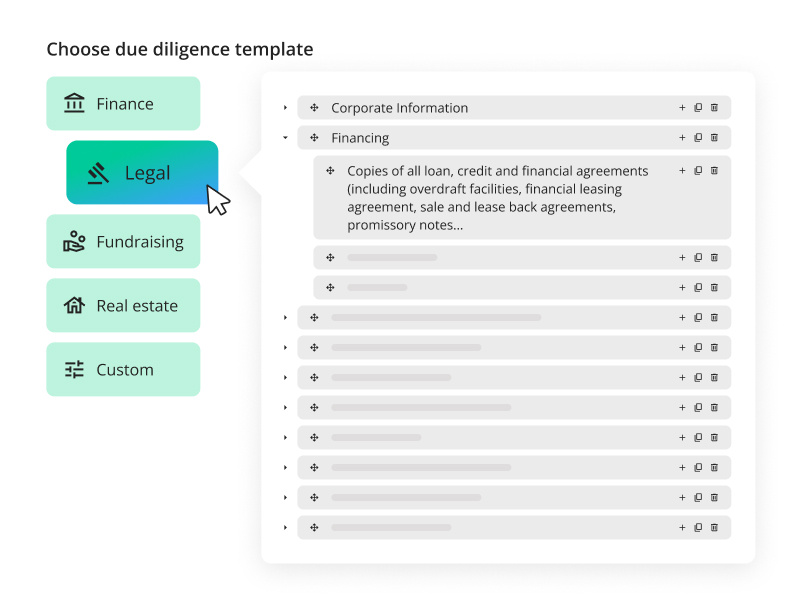
A seller should ideally begin preparing well before going to market. Review the financials. Organise the documentation. Identify potential risks. Understand customer and product profitability. Assess management dependencies. Clean up inconsistencies.
Teach the client what the process actually involves
One of the biggest mistakes an advisor can make is making the transaction sound easier than it is. Telling a business owner "don't worry, we'll take care of everything" may feel reassuring. But it can create problems later.
Clients need to understand what will be expected of them, how much time the process will take and why the preparation matters. A well-informed seller is more likely to be an effective participant in the transaction.
A successful M&A process also requires an extraordinary level of personal commitment. Transactions rarely follow office hours, and critical issues often arise when least expected. You need to be available, take ownership and be willing to go the extra mile. Sometimes that means helping the buyer resolve an issue, even though you represent the seller. If removing that obstacle helps your client achieve a better outcome, it is part of the job.
Look at the business through the buyer's eyes
Owners naturally focus on what makes their company successful. Advisors need to ask a different question:
What could make a buyer nervous?
That mindset can reveal everything from customer concentration and currency exposure to management dependency, margin quality and contract risk.
Don't confuse negotiation with value creation
Getting the other side to concede another percentage point may feel like a victory. But the best outcome is not necessarily the deal with the most aggressive negotiation.
The best outcome is one that maximises value for the client while keeping the transaction on a credible path to completion.
Use technology to make complexity manageable
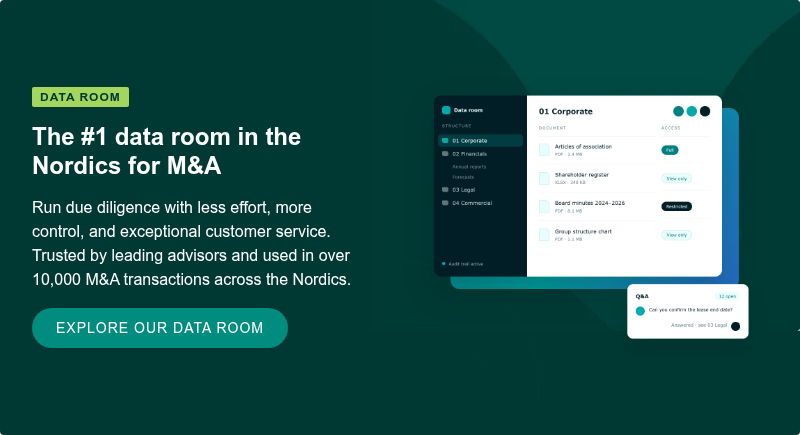
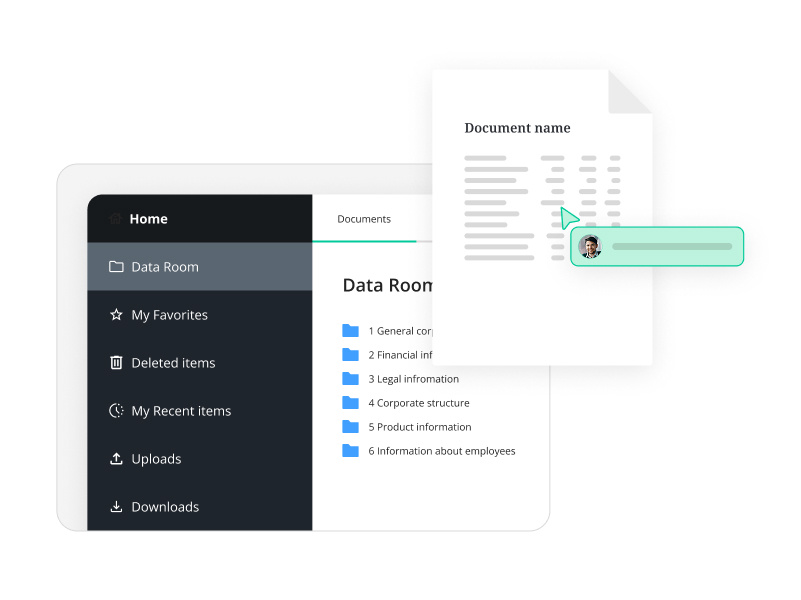
Modern digital data rooms are not simply a replacement for filing cabinets. They are part of the infrastructure that allows complex transactions to function.
When multiple advisors, countries, workstreams and thousands of documents are involved, secure digital collaboration becomes essential. The technology should make the process more transparent, organised and efficient, allowing advisors to spend more time on analysis and less time searching for documents.
Remember the human side
Perhaps the most important lesson is the simplest. Behind every transaction is a person.
For a founder or family owner, selling a company can mean letting go of something they have spent decades building. That requires more than technical expertise. It requires empathy, communication and trust.
After many years in M&A, you also learn that no two people approach a transaction in the same way. Some are analytical, others intuitive. Some respond to direct conversations, while others need a more diplomatic approach. Reading people and adapting your communication is an important part of the job. Often, the most effective interventions are the ones that attract the least attention.
The Real Product an M&A Advisor Provides
Ultimately, Nikolai's experience suggests that the real value of an M&A advisor is not simply access to buyers or negotiation skills.
At its core, the advisor’s role is about managing uncertainty and complexity. They help the seller understand what is coming, structure the process, coordinate specialists and anticipate the questions a buyer is likely to ask. They also help identify risks, build a compelling story around the business, manage communication and keep negotiations constructive.
Most importantly, they take ownership of the process, anticipate obstacles and keep the parties moving towards an outcome that serves the client. That is what makes the difference between a passive intermediary and an effective deal facilitator.
Good judgement means knowing when to push harder, when to change approach and when to walk away.

Why the Right Data Room Matters
This is also where the right technology can make a meaningful difference. For an M&A advisor, a data room needs to make a complex process simpler, not add another layer of complexity. After years of working with different solutions, Nikolai says Oaklins continues to choose Admincontrol because it combines trust, ease of use and straightforward pricing.
"We trust Admincontrol. We trust the user friendliness," he says.
For Nikolai, the platform's simplicity is a major advantage. Documents are easy to find, the interface is intuitive, and users can access what they need without being overwhelmed by unnecessary features. That matters when a transaction involves lawyers, advisors, buyers and specialists all working in the same environment.
The pricing model is another plus. With no limit on users, the cost remains predictable even as more people join the transaction. As Nikolai points out, it is difficult to know at the beginning of a deal exactly how many users will eventually need access. A simple, transparent pricing structure removes that uncertainty.
Ultimately, his recommendation comes down to experience.
When asked whether he would recommend Admincontrol to another M&A advisor, his answer is unequivocal: "Of course I would recommend it."
For Nikolai, the best technology stays out of the way, allowing advisors to focus on what really matters: driving the process, resolving issues and getting the deal done.
From Transactions to Results
From paper folders to global transactions, Nikolai's career neatly mirrors the evolution of M&A itself.
He started in an era when due diligence could mean physically sitting in a room surrounded by dozens of paper folders. Today, transactions can involve hundreds of professionals working across multiple jurisdictions through highly structured digital environments.
The technology has changed. The processes have become more sophisticated. Due diligence has become more rigorous, and M&A has become more professional.
But the fundamentals remain. How do you bring two parties together, address their concerns and maintain momentum towards a successful transaction? For Nikolai, the answer is not to be the toughest person in the room. It is to know how to lead the process and navigate the people involved.
That means preparing thoroughly, anticipating risks, communicating clearly, taking decisive action and using the right tools.
The best M&A advisors combine commercial determination with the ability to understand people and navigate complex situations. They are relentless in pursuing their client’s objectives, but thoughtful about how they get there. They know when to push, when to listen and when to find another way forward.
Ultimately, it is about taking responsibility for the process, anticipating challenges and doing whatever it takes to achieve the best possible outcome for the client.