
 Boards & Governance
 M&A & Transactions




 Board Management Software
 Customer stories
 Insights
 Events & Webinars
 Security & Privacy
 Product updates







 Login

Due diligence is the investigation a buyer carries out before a deal to check the target's financial, legal and operational position. It starts once a deal is agreed in principle, usually takes between 30 days and six months, and is run in a secure virtual data room using a due diligence checklist. Below, we answer the six questions we hear most often about this stage of the M&A process.
1. What is due diligence and why is it important?
Due diligence is the process of evaluating the risks and rewards of a potential deal before it is signed. The deal might be the acquisition or sale of a company, a merger, or the disposal of assets through a divestiture. The information gathered should give a detailed picture of the target company's position, so that all the facts are known before the transaction is agreed. For a fuller introduction, read what is the due diligence process?
Due diligence matters because it makes M&A decisions informed and balanced. It reveals the level of risk in a transaction and highlights red flags that could stop the deal, or points that need further negotiation. Many deals live or die at this stage.
It covers financial, operational and legal factors, and increasingly environmental, social and governance (ESG) factors too.
Effective due diligence uses a structured approach to weigh the potential benefits of a transaction against the risks that must be mitigated.
2. When is due diligence required?
Due diligence takes place once a deal has been agreed in principle, typically after a letter of intent or term sheet, but before any binding contracts are signed. Its outcome determines whether the transaction goes ahead as planned, needs to be renegotiated or should be abandoned.

3. How long does due diligence take?
Due diligence usually takes anywhere from 30 days to six months. The timeline depends on the type and size of the company and the complexity of the deal. Cross-border or highly regulated transactions take longest.
Two things keep timings on track: preparing documents before buyers are invited in, and having the right advisers and subject matter experts on both sides, including lawyers, accountants and financial advisers.
Both sides of the deal need advisers and subject matter experts on the due diligence team, including lawyers, accountants and financial advisers.
4. What is a virtual data room used for?
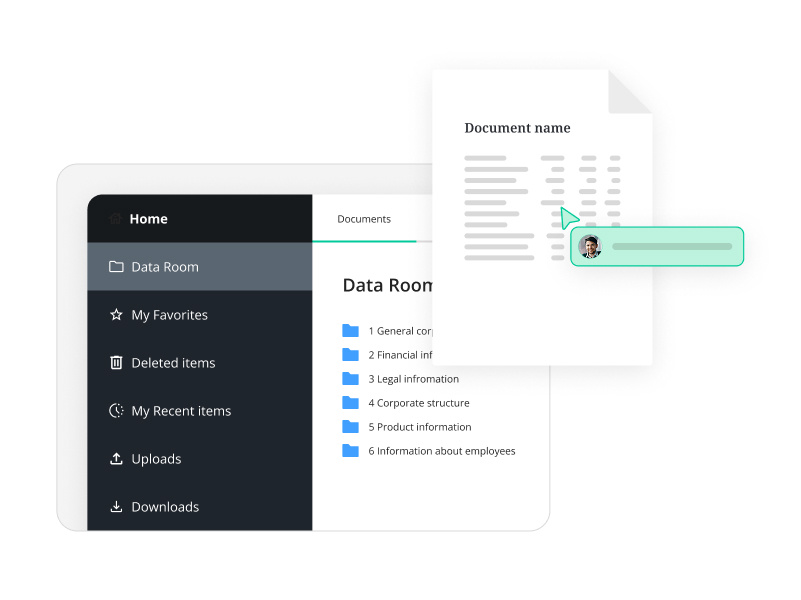
A virtual data room, or deal room, is a secure online space for storing, sharing and reviewing confidential documents. It is most often used during due diligence, holding all the documents buyers and sellers need to review a company's assets and liabilities before a deal is closed, renegotiated or abandoned.
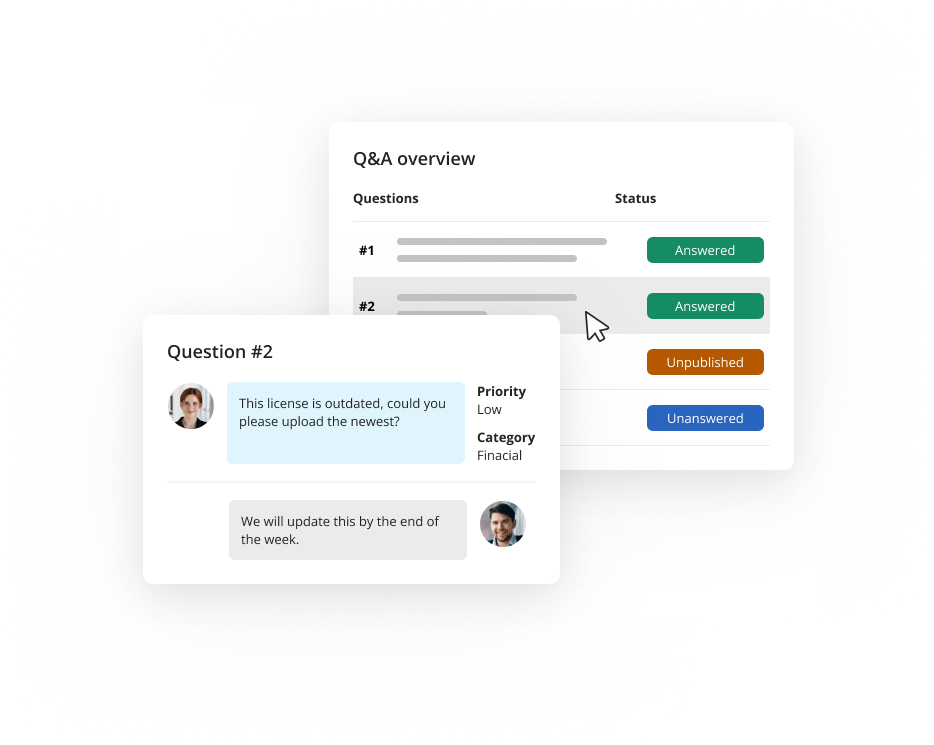
Data rooms are also used for fundraising, restructuring and project management. Whatever the use, protecting access to confidential information is paramount. Encryption, two-factor authentication, granular permissions and activity tracking make sure documents are only accessible to the people who should see them. Unlike general cloud storage, a data room also gives you a full audit trail and a structured Q&A.
5. How do I set up a virtual data room?
Setting up a virtual data room takes four key steps: choose a provider, build your folder structure, set user permissions, then upload documents and assign tasks.
- Select your virtual data room provider. There are many providers, so compare the pros and cons. As a minimum, compare:
- Features and pricing, and whether pricing is transparent
- The storage you will need
- Security, such as two-factor authentication and ISO 27001 and SOC 2 Type II certifications
- The level of ongoing support, ideally 24/7
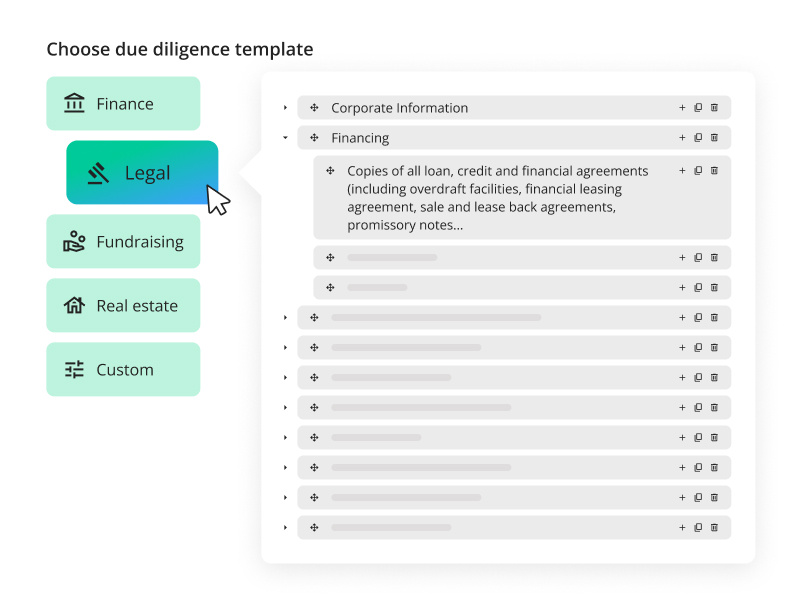
- Build and index your folder structure. Set up and index your folders ready for upload. Some providers do this for you: Admincontrol's folder wizard lets you choose a template structure or create your own, so a data room can be open the same day and fully structured in under an hour. See all data room features.
- Add users and set access permissions. Administrators set permissions for all other users, including restricting access to specific folders or documents and controlling who can view, download or print.
- Upload documents and assign tasks. Add documents and assign reading tasks to the team. Look for features that speed this up, such as bulk upload, and a task dashboard to track progress.
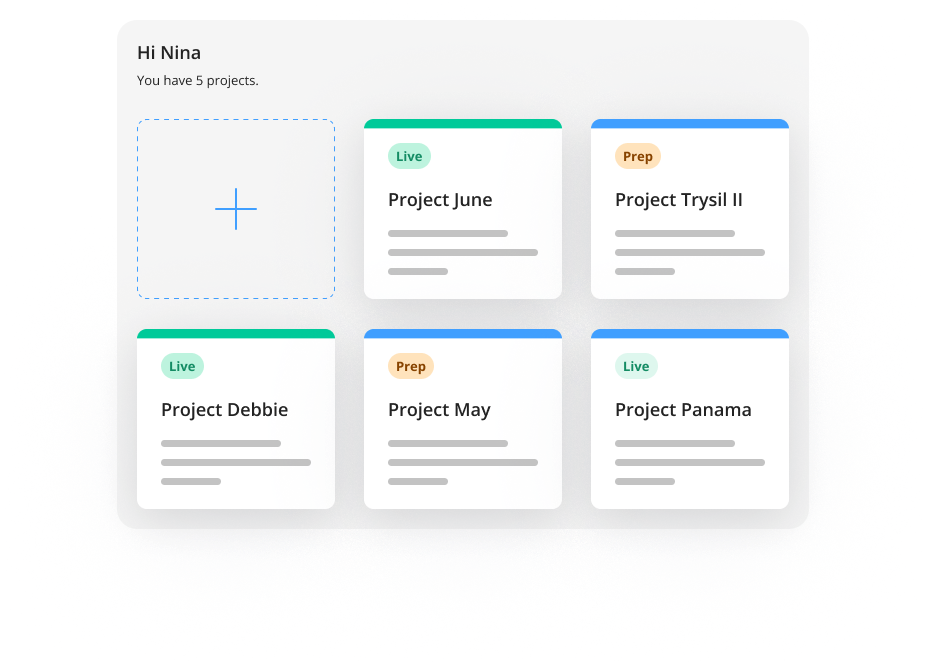
If you want to get organised before buyers are involved, a preparation portal lets you build the data room internally first.
A good data room provider should get you up and running quickly, taking care of the basics so you can focus on the deal itself.
6. How do I create a due diligence checklist?
A due diligence checklist lists every document and piece of information the buyer needs, so the buyer side can request it and the seller side can track what to supply. Start from a template such as our legal due diligence checklist or financial due diligence checklist.
A complete checklist covers:
- Financial statements, accounts, tax returns, assets and budgets
- Legal agreements, contracts, disputes, patents, trademarks and licences
- Corporate structure, governance, board members and board meeting minutes
- Market share and position, competitors, products and services
- Employee information, remuneration and benefits, and organisational structure
For records such as tax returns and accounts, request at least the past three years. For others, you will also want forecasts for the years ahead.

Related reading
- How to do due diligence on a company: a guide by business type
- What is a data room? Features, benefits and how to set one up
- The due diligence risk nobody talks about: email